Cast iron
Compare CY and SN grades according to finishing requirements, machining allowance and interruption level.
Compare grades →
A clearer route to the right grade.
Explore ceramic grades for cast iron, hardened steel and heat-resistant alloys. Send your material and machining conditions for an application review.
Get a Grade RecommendationBrowse Insert ModelsCY mixed ceramics · SN silicon nitride & SiAlON · SW whisker-reinforced ceramics
Material → Cutting condition → Grade → Insert geometry
Confirm insert dimensions, grade and supply options before ordering.
Compare CY and SN grades according to finishing requirements, machining allowance and interruption level.
Compare grades →Explore CY grades for general machining and finishing. Include hardness and surface finish requirements in your enquiry.
Review my application →Explore SW40 and SiAlON grades SN800 / SN1000. Identify the alloy and operation before selecting a grade.
Explore alloy grades →Application descriptions from the October 2026 catalog. Final selection depends on your workpiece, setup and cutting conditions.
Roughing and medium machining of high-speed steels and high-chromium steels at low to medium cutting speeds, including heavily interrupted cuts.
Ask about SW20 →Roughing and finishing of nickel-based and cobalt-based alloys at high cutting speeds, in continuous or lightly interrupted cuts.
Ask about SW40 →Finishing of hardened steels and cast irons.
Ask about CY200 →General machining of hardened steels and cast irons.
Ask about CY400 →Fine finishing of hardened steels and cast irons.
Ask about CY600 →High-speed fine finishing of hardened steels and cast irons.
Ask about CY800 →Roughing and interrupted machining of cast irons.
Ask about SN200 →Roughing and heavily interrupted machining of cast irons.
Ask about SN300 →General machining of cast irons.
Ask about SN400 →High-speed roughing of hard materials.
Ask about SN500 →High-speed roughing of hard materials in interrupted cuts.
Ask about SN600 →General machining of high-temperature alloys and Inconel under dry cutting conditions.
Ask about SN800 →General machining of nickel-based and cobalt-based alloys.
Ask about SN1000 →Grade enquiries require confirmation of geometry, edge preparation and supply availability. Catalog references do not establish stock status.
Open an existing model page to review dimensions, then send the complete ISO code, grade and quantity.
80° rhombic insert family
View CNGA →Triangular insert family
View TNGA →Round insert family
View RNGN →Provide the material designation and hardness. “Cast iron” or “alloy steel” alone may be insufficient.
Describe holes, scale, grooves and interrupted surfaces. Edge strength and machine rigidity affect grade selection.
Send speed, feed, depth of cut, coolant conditions and a wear photograph to support the review.
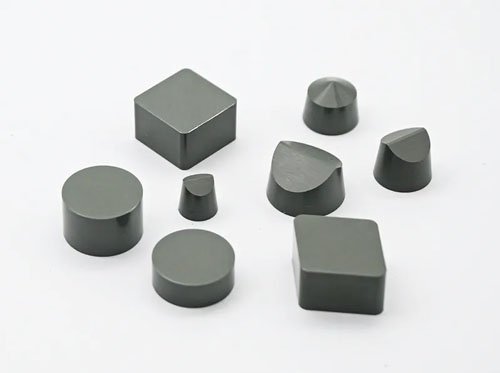
Ceramic inserts are cutting tools made from ceramic materials selected for heat resistance and wear resistance. Different material systems suit different machining conditions, including cast iron, hardened steel and selected heat-resistant alloys.
Ceramic inserts are used in high-speed machining of cast iron, hardened steel and selected nickel-based or cobalt-based alloys. Suitable operations depend on the grade, insert geometry and cutting conditions. Typical applications include automotive castings, bearing components and heat-resistant alloy parts.
The choice depends on material, hardness and cutting conditions. Ceramic inserts are often considered for productive cast iron machining, while CBN is often considered for hardened steel and hard ferrous materials. Compare tool life, surface finish and cost per part under your actual conditions.
Some ceramic grades are intended for interrupted machining, but capability differs by grade and application. Share the interruption level, workpiece material, machine rigidity and edge preparation before selecting a grade. Do not assume that every ceramic grade suits heavy interruption.
The catalog lists CY200, CY400, CY600, CY800, SN200, SN300, SN400, SN500, SN600, SN800, SN1000, SW20 and SW40. Start with the workpiece material and machining operation, then confirm hardness, cutting conditions, geometry and edge preparation.
Compare ceramic grades → or request a grade recommendation →.
Send the complete ISO code or a drawing. Include thickness, corner radius and hole dimensions where applicable, plus the current holder or insert photo.
If you know the model, send the full insert code, preferred grade and quantity. For a recommendation, start with your material and machining goal. Hardness, speed, feed, depth of cut, coolant, interruption level, required finish and wear photos help with application review.
Send the full model code and quantity for supply confirmation. Catalog reference specifications do not establish current stock or every available grade-and-geometry combination.
Send your drawing, dimensions, material and machining requirements so Huamin can review feasibility and quotation details.
Know the model? Send the complete insert code, preferred grade and quantity.
Need a recommendation? Start with your workpiece material and machining goal. Add hardness, cutting parameters or a drawing if available.
Request Application SupportDiscuss on WhatsAppEmail: support@hmcbn.com